Let’s be real for a moment. It feels like the list of things we need to do just keeps getting longer. Some of it was planned, some of it just popped up out of nowhere, and some of it just unleashed pure chaos for a moment. And when you’re juggling it all, it can feel like you barely have the chance to make time for the things that actually matter to you.
When something starts slipping — maybe you’re tired all the time, skipping meals, or putting off the things you enjoy — it’s easy to think, “I just need to be more disciplined” or “I just need more time.”
Sometimes the people around us think that too. But most of the time, that’s not really the issue.
The truth is that you’re not lazy. You’re just trying to hold everything together, all at once.
Life isn’t just about juggling work and school. It’s learning to carry out all your priorities at once while navigating whichever one is important to you in the present.
You’re trying to:
- work enough to survive
- study enough to build the life you want
- eating enough to feel satisfied
- exercise enough to feel good in your body
- love enough to be connected with yourself and others
That’s a tall order for one person — but not an uncommon order.
When you really sit down and think about all of that, the feeling of being overwhelmed creeps in fast.
To cut down on that order, you cut corners by prioritizing one over the other. In doing that, you sacrifice your energy and hobbies to the point that you tell yourself you’ll get to it later.
That works for a while, but over time, those sacrifices catch up to you. That’s usually when exhaustion turns into frustration or resentment, even toward the things you once cared about.
The problem isn’t that you don’t know how to make time. Most of us were just never taught how to build systems that actually support real life, not an ideal version of it.
So in this post, I want to walk you through some simple, realistic ways to set up systems that help you buy back your time — without guilt, hustle, or burnout — so you can finally make time for what matters to you.
Starting off with one simple step.
This site contains affiliate links, please view our disclaimer policy for more information.
Get a Planner that Matches Your Brain
This is going to be the first step in making time for yourself.
It’s all going to start with choosing a planner that works for you.
You are not just going to pick any planner. You need the right planner.
A good planner should help you clearly see what days, weeks and even months look like at a glance.
Before you grab the first cute planner you see at a store or online, you need to choose your planner with intention.
You’re going to pick a planner that fits into your life.
To decide which kind of planner you need, you need to go through the following steps to decide which kind you want.
Step One: Decide on the Format
The first thing to ask yourself is whether you want a physical or digital planner.
If you’re leaning digital, think about where you’ll use it the most.
Will you mainly plan on your phone, your iPad, or your laptop?
Digital planners are great if you like having everything with you at all times and enjoy flexibility.
If you prefer a physical planner, consider size.
Do you want something small that fits in your bag or a larger planner that stays on your desk and gives you more writing space?
There’s no right or wrong answer here — it’s all about what fits your routine best.
Step Two: Choose the Layout That Matches Your Brain
Next, think about how much detail you like when planning.
Some people love mapping out every single day, while others prefer seeing the big picture. Ask yourself which of these sounds most like you:
Daily Planners
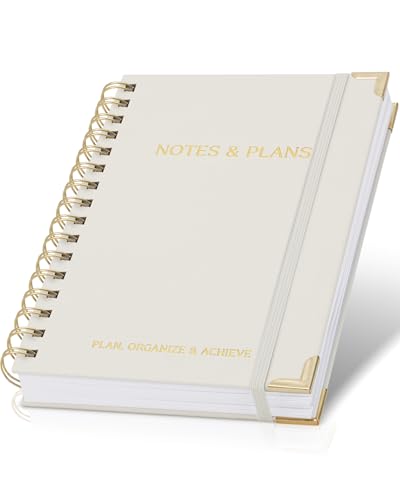
Daily planners are great when you want detailed plans for each day, with space for schedules, to-dos, and reflections.

|

|
|

|

|
|
$7.79
|
$11.99
|
$12.99
|
$26.99
|
$25.99
|
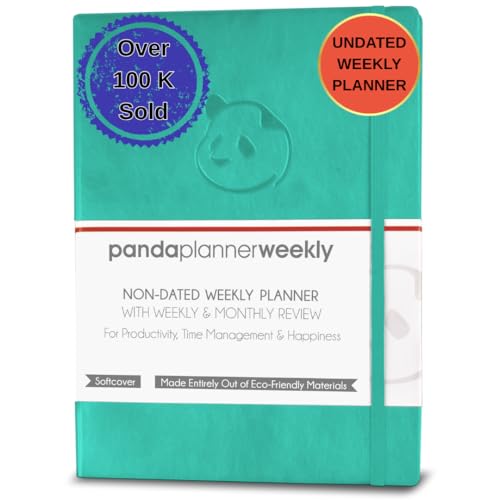
Weekly Planners
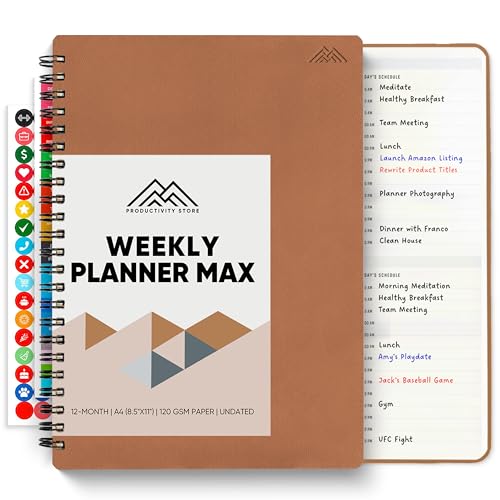
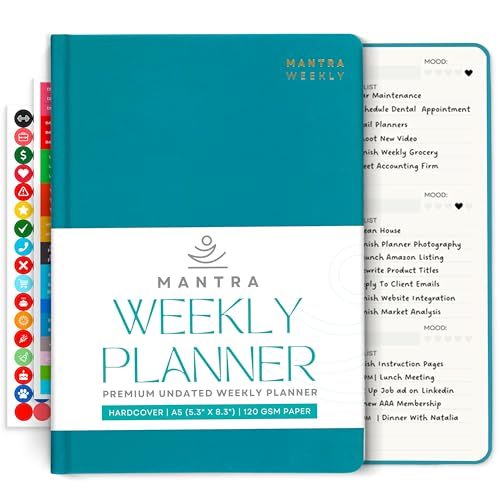
Weekly planners show your entire week at a glance — ideal if you like a broader weekly rhythm with room for goals and tasks.

|
|
|
|

|
|
$14.99
|
$19.99
|
$25.00
|
$24.99
|
$39.98
|
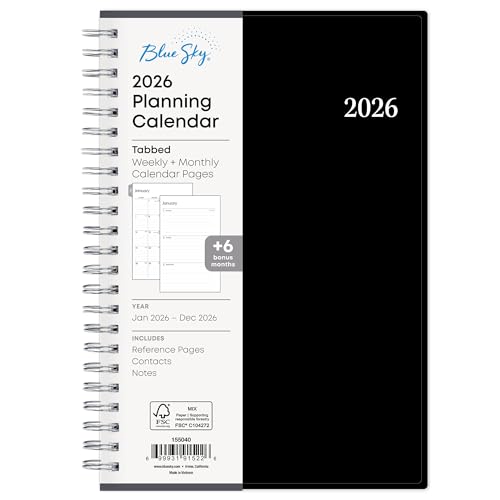
Monthly Planners
Monthly Planners give a big-picture view of goals, deadlines, and important dates.

|
|

|

|

|
|
$4.99
|
$9.99
|
$8.99
|
$7.99
|
$16.89
|
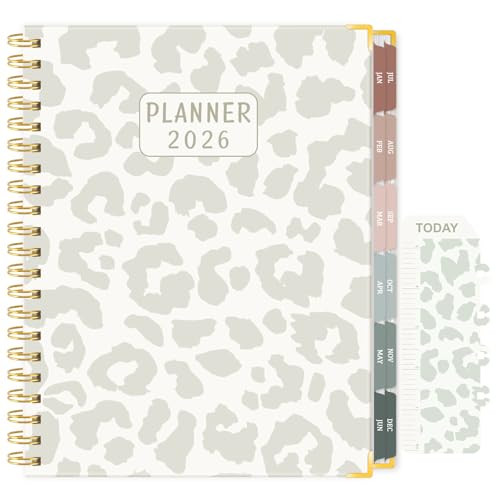
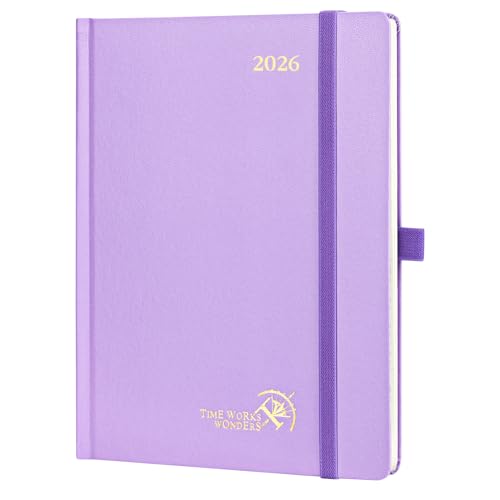
Hybrid Planners
Hybrid Planners combine daily, weekly, and monthly planning to keep everything organized in one place.
|

|

|
|

|
|
$6.99
|
$19.99
|
$19.99
|
$19.99
|
$44.99
|
Step Three: Do You Want Your Planner to Have a Purpose?
There are plenty of generic planners out there that work just fine.
However, there are planners that are designed for specific roles such as students, teachers, business owners, and content creators.
Author’s Pick
Personally, I chose a general digital hybrid planner by The Dailee.
I used to buy their physical planners. I loved them, but the planners were thick and bulky. I prefer to carry my planners with me everywhere without the extra weight or worry about getting them damaged by spills or dents.
Switching to digital just made sense for me.
I prefer to buy their generic daily planner that is mapped out for the year. It has everything together in one place, which makes planning feel simple instead of scattered. Some of the features they have that I love include:
- Daily Pages with Time-Blocking, To-Dos & Notes
- Weekly Cleaning Checklist
- Weekly Habit Tracker
- Weekly Grocery List
- Weekly Workout & Meal Planner
- Monthly Budgeting + Expenses
- Spring Cleaning Checklist
- Yearly Calendar
- Yearly To-Dos
There’s even more included, but those are the things I personally use the most.
They also offer planners designed for specific purposes — like business, content creation, and students — so no matter what season you’re in, there’s likely one that fits.
I highly recommend you check them out and see which format and purpose works best for you.
Once you’ve decided the right planner for you, make sure you stick to it.
Organize by Priorities
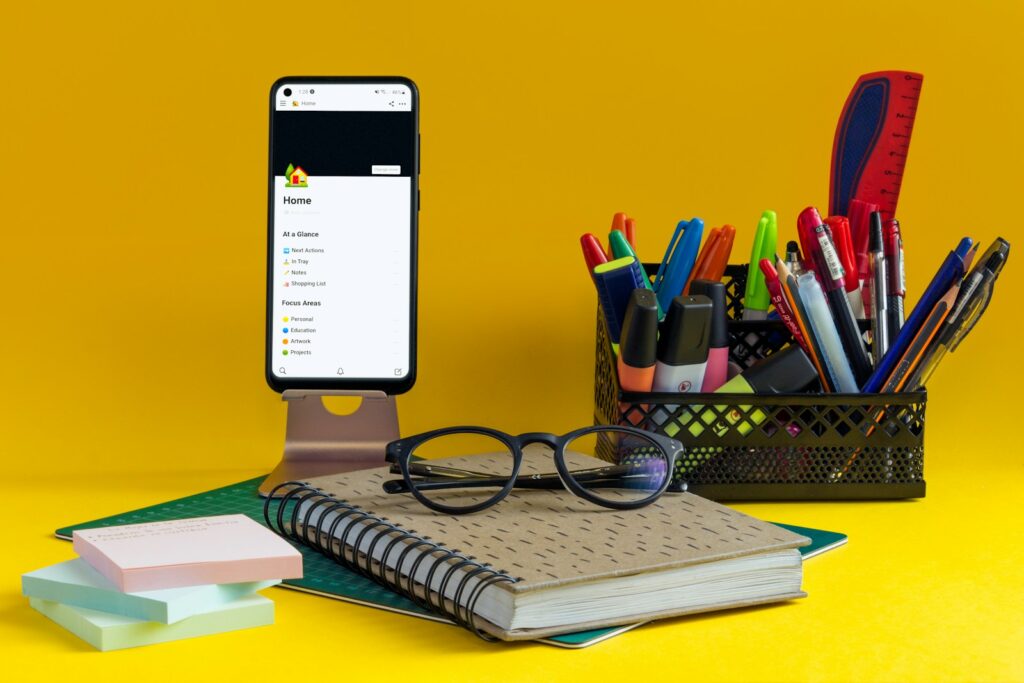
You have things that you must do, like everyone else.
Sometimes, in the sea of things that must be done, we lose track of the big milestones that we want to achieve.
We first react to the things that are right in front of us that we forget to slow down and remember what kind of path we’re on.
In forgetting the path, we push the things that we want either further down the line or into non-existence.
When you treat everything with the same importance, nothing is manageable.
To achieve the things you truly want, you first have to organize your priorities by three tiers:
Tier 1: Non-Negotiables
These are the things that keep you life running: work, school, deadlines, appointments, exercise, and sleep.
Tier 2: Maintenance Tasks
Chores, errands, emails, prep work. These are all important, but are flexible to deal with.
Tier 3: Joy & Rest
Hobbies, social time, creative play, or just doing nothing.
When joy is treated as optional, it’s the first thing to disappear. Without joy, burnout starts creeping in.
Once you have everything sorted, you get to see the bigger picture. Once you see the bigger picture, you have an idea of how to treat everything and make time for the things that actually matter to you today and not yesterday.
Now, keep that picture in mind and translate that priority list into your planner by color coding it. Color coding is supposed to help with immediately identifying what you’re reading to a certain tier.
You can use highlighters, sticky flags, or sticky notes to emphasize their tier.
Once you have all your priorities straight, you’re ready to move onto the next step.
Time Block Your Life

Now that your priorities are clear, the next step is learning how to make time for the goals that matter most.
Now, not all goals need the same level of attention.
Long-term goals can move forward by consistently making time in small daily blocks, while short-term goals often require more focused and intentional time.
Understanding this balance helps you stay realistic and avoid burnout.
Even with the perfect planner, making time isn’t automatic.
You’re human, not a machine. You still need to make time to rest, eat, and recharge through hobbies you enjoy.
When you don’t intentionally make time for both your goals and your well-being, time tends to slip by without real progress.
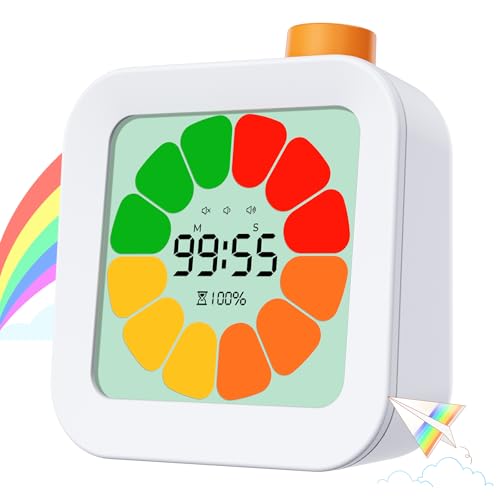
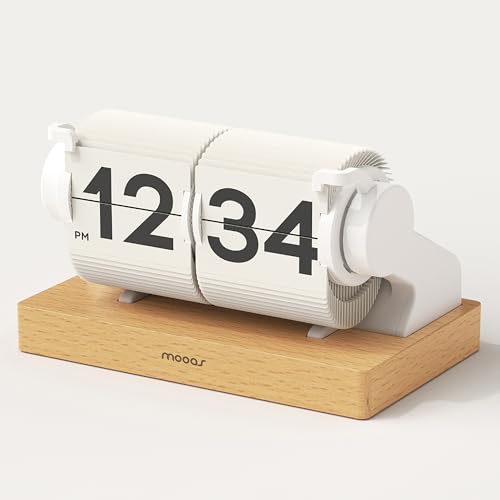
One of the easiest ways to make time feel more tangible is by using time-awareness tools like:
Visual Timers

|
|

|

|

|
|
$13.22
|
$17.95
|
$14.99
|
$14.99
|
$16.75
|
Desk Clocks

|

|

|

|
|
|
$16.99
|
$21.99
|
$23.74
|
$29.99
|
$59.90
|
Pomodoro Tools

|

|

|

|
|
$18.99
|
$23.90
|
$37.99
|
$79.97
|
These tools help you see your time clearly and stay present while working.
Author’s Pick
In my previous posts, I said that I used Study Bunny.
If you don’t know what Study Bunny is, it’s an app that
I’ve shared before that I used Study Bunny, which works well as a Pomodoro timer and habit tracker. It also includes flashcards and a reward system that makes studying more engaging.
However, over time, the frequent ads between navigating pages became distracting.
Now, I primarily use Studyfoc.us, a lightweight and distraction-free Pomodoro timer. It offers virtual study rooms, ambient sounds, customizable backgrounds, and built-in tracking so you can see exactly how you’re making time and staying consistent.
Studyfoc.us also has a system to check how long you have studied, how consistent you are, and how many goals you have achieved. They’ll rank you against other people who use the platform.
Once you’re able to make time visible and intentional, it becomes much easier to protect it. This leads you to the next step.
Create “Grab and Go” Systems
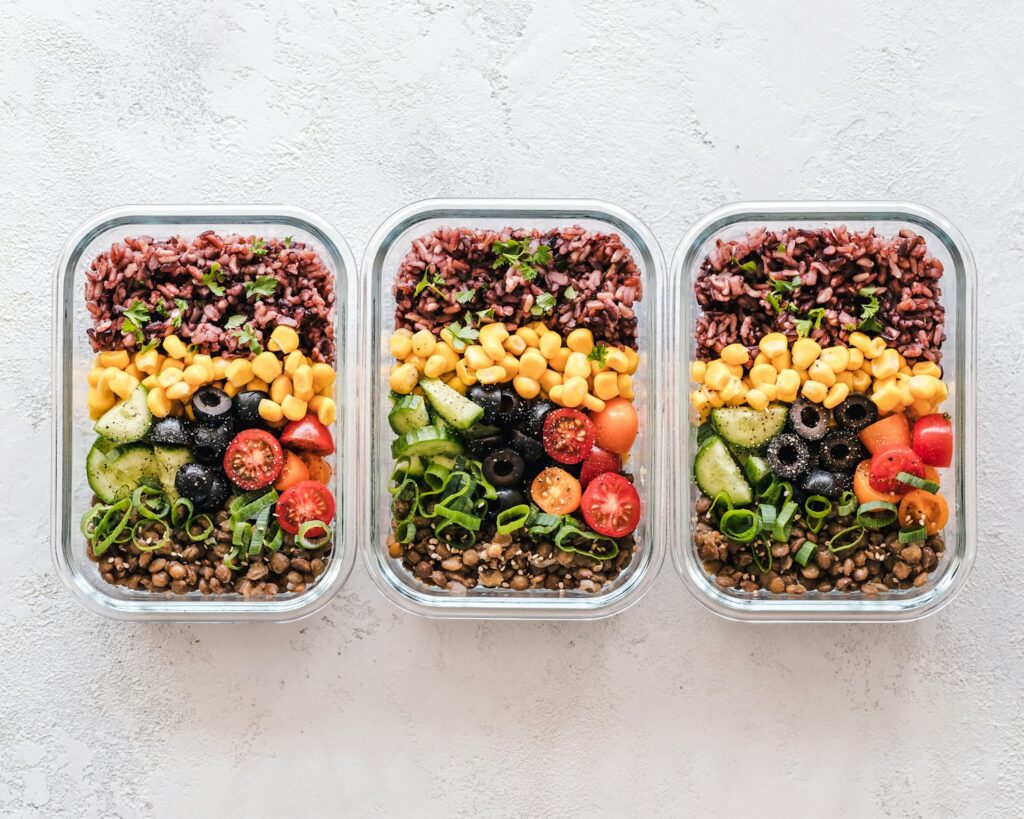
A lot of time isn’t lost during big tasks. It disappears between them.
It’s the moment you finished something and before you start the next thing. The pause between finishing one task and deciding what comes next.
These in-between moments don’t feel important, but they quietly determine whether you’re able to make time or have it slip away from you.
Transitions drain more energy and time than we realize.
This isn’t about doing more. It’s about removing friction.
One simple way to make time is by having a bag that stays packed. Whether it’s for work, school, or the gym, keeping the essentials inside means you’re not rebuilding the same setup every single day.
The same idea applies to studying or working from home.
Instead of letting supplies be all over your space, creating a small study kit that stays in one place can make it much easier to start. When pens, highlighters, sticky notes, and earbuds are already together, you remove the barrier of “getting ready” to work.
Meals are another area where time quietly disappears.
Deciding what to eat, finding containers, and cleaning up afterward can feel overwhelming when your energy is already low. A grab-and-go meal setup doesn’t have to be complicated. Even having a few ready-to-use containers in the fridge can help you make time for meals without overthinking them.
When things are easy to reach and already set up, you’re less likely to procrastinate or avoid starting altogether.
What The Author Does
I keep my work bag ready with my laptop, chargers, headphones, water bottle, and pencil cases. I don’t rebuild it every morning — it just stays packed.
For working at home, I use a Logitech Casa Pop-Up Desk and Logitech Vibe 100 headphones. They sometimes live in my work bag, which makes it easy to create a comfortable workspace wherever I am—no setup stress required.
For meals, I freeze some of my meals in Souper Cubes and put them in a reusable silicone bag. They make meals ready to go without the hassle of breaking them into portions. Tonight I pulled out two blocks of veggie soup, warmed them for 10 minutes, and had dinner without thinking. No decision fatigue, no scrambling.
These aren’t big systems — they’re just small setups that remove friction so I can actually make time instead of losing it between tasks.
Automate the Small Stuff

You don’t need more discipline. You need fewer decisions.
Even when tasks are already set up, there’s still another drain on your time: having to decide.
Deciding when to start, what to remember, or what needs attention next. Those choices may seem small, but they quietly chip away at your ability to make time.
This is where automation comes in.
Unlike grab-and-go systems, automation removes the decision entirely. Things happen whether you remember them or not.
The lights turn on.
The bills get paid.
The money moves where it’s supposed to go.
No mental effort required.
Living in a constant state of decision-making—even for tiny things—uses energy that could be spent on work, rest, or progress. When you automate the obvious, you free up mental space and make time without forcing yourself to “try harder.”
Every decision you automate is energy you get back. Over time, these systems fade into the background and quietly support your routine.
Simple automations can quietly change your life:
- Lights that turn on automatically in the morning
- One charging station where everything lives
- Alarms that wake you gently
- Auto-pay for bills
- Grocery pickup orders
- Automatic transfers to savings or investment accounts
These systems don’t depend on motivation. They work when you’re busy, distracted, or exhausted—especially when you’re tired.
And that’s what makes them powerful: they help you make time even on the days when you have very little to give.
What The Author Does
In the mornings, I set my alarm to wake me up. However, waking up is harder when it’s still dark.
To make time for a smoother start, I use smart light bulbs in my lamps to automatically turn on a few minutes before my alarm and shut off after I leave for work. It removes friction without me having to think about it.
I do something similar with my electric kettle. A smart plug turns it on 20 minutes before my alarm so hot water is ready when I wake up. The kettle shuts off automatically, and the plug turns off after I leave for work, so it’s hands-off and safe.
When I come home from work and need to study, I place my devices on a charging dock so everything powers up in one spot. My laptop gets charged once I’m done for the day. It’s a small habit that helps me make time later by avoiding dead batteries and clutter.
For dinner, I don’t always eat something prepped. Some days, I just want to cook something solid.
But as a full-time student who also works full-time, meal prepping is one of the easiest ways I make time during the week. I decide what I’ll eat on Saturday, so weekday evenings don’t turn into another decision-making session.
If there is a day that I don’t feel like cooking, at least there would be frozen meal prepped food ready to be used.
Make Time to Protect Your Energy
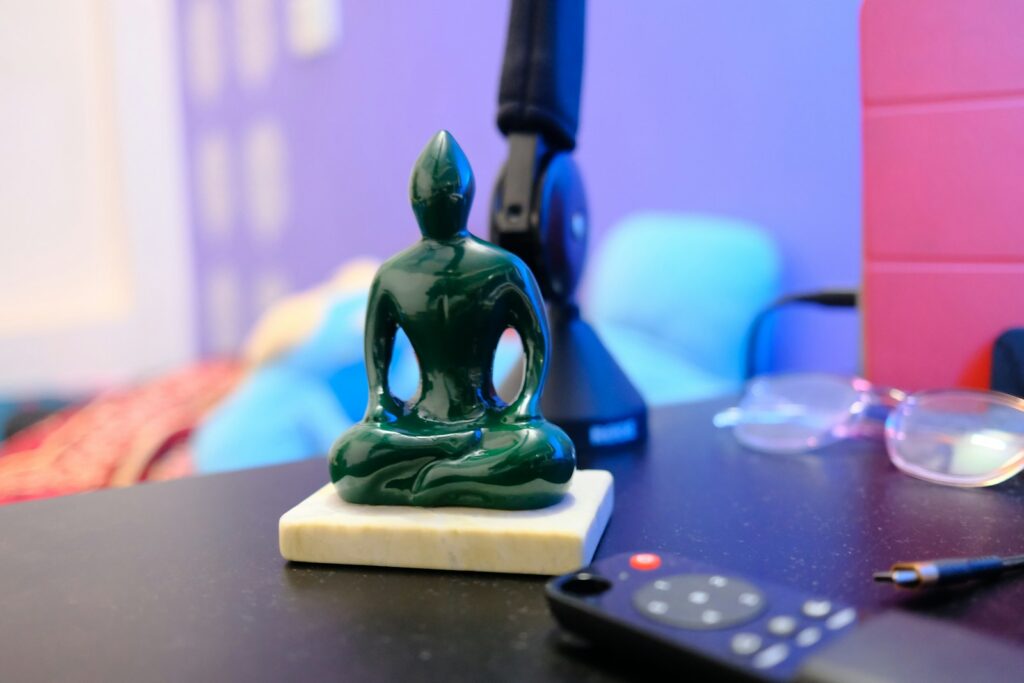
Time management advice often ignores the most important factor: energy.
You can make time on paper and still feel drained if your energy is constantly being pulled in too many directions.
Blocking out hours for sleep helps, but sleep alone isn’t enough to process stress. If your only downtime is collapsing into bed or scrolling through videos, your body may rest—but your mind won’t always rest and recover.
Protecting your energy means making time to actually decompress.
That might look like stepping away from screens, moving your body, or doing something that lets your brain slow down instead of staying stimulated.
Burnout doesn’t always look obvious or dramatic. Sometimes it looks like:
- Avoiding the things you used to enjoy
- Feeling guilty for resting
- Staying productive but never feeling satisfied
When burnout happens, it’s no longer just a motivation problem but an energy problem as well. If you don’t make time to recharge, even well-planned days start to feel heavy.
Rest isn’t a reward for finishing everything. It’s part of what allows you to make time, focus clearly, and show up consistently in the first place.
How The Author Decompresses
When I need to decompress and have the time, I’ll spend it with friends. We’ll talk, eat out, or do something fun together. That kind of connection helps me reset the most.
Sadly, our schedules don’t always line up and some friends live far away. Meaning we have to make the time to coordinate when we would see each other and decide where to go.
On those days, I make time for quieter ways to unwind. I’ll grab my tortilla blanket, put on a cozy movie or background music, and color in a few coloring books. Here are some of the coloring books that I’ve done or plan to finish:

|

|

|

|

|
|
$9.37
|
$10.50
|
$11.18
|
$14.66
|
$16.99
|
It’s simple, but it helps my mind slow down without needing much effort.
Most of the time, I’ll pair that with a cup of tea and a few snacks. If I feel like it, I’ll meditate or put on a sheet mask and just sit still for a while.
It’s not exciting and that’s kind of the point.
What helps you recharge doesn’t have to look impressive. It just has to work for you.
When you make time to rest in ways that actually calm your nervous system, everything else feels more manageable.
Accept That You Can’t Do Everything Every Day

The cliche and obvious truth you’ve probably heard before and most of us resist:
Making time for everything doesn’t mean doing everything today.
Life moves in seasons. Some goals need your attention now, while others can rest for a while without falling apart.
Pausing doesn’t mean you’ve failed—it often means you’re responding to where you actually are.
You don’t have to make time perfectly within a single day. You can make time across a week, a month, a year — not just a day.
Progress still counts when it’s spread out.
There will be days when your energy goes toward work and days when rest takes priority. Neither cancels the other out. What matters is pacing yourself instead of expecting constant output.
Progress doesn’t disappear just because you slowed down. When you balance the time you spend working with the time you spend resting, you move forward in a way that’s sustainable—and that’s what actually gets you where you want to go.
If you’ve ever felt like you can’t make time no matter how hard you try, you’re not broken.
You’re just human.
Making time isn’t about squeezing more productivity out of yourself. It’s about creating systems that support your energy, reduce friction, and leave room for real life.
Start small. Adjust as you go. Be kind to yourself when things don’t go perfectly.
And when everything feel full and busy again, come back to this post — not as a rulebook, but as a reminder that you’re allowed to live slowly and intentionally.